How many restroom stalls does your Arizona event need? A planning worksheet
Start with headcount and duration, because every other number comes from those two. Arizona's public toilet rule gives a floor, and your real count is often higher. This worksheet turns the floor into a stall count you can send with a quote request.
The state baseline is one toilet for the first 100 people and one more for each additional 100. A trailer has several stalls, so you divide the toilet count by the stalls in the trailer you choose. The rule is written for public portable toilets, and the county health office can change the number for your event.
Take a 250 guest wedding. The baseline lands at about three toilets, but a wedding runs several hours with a cocktail hour and a dance floor, so most planners go above the floor. Two trailers placed apart also split the lines, which matters at a reception where everyone leaves their seats at once.
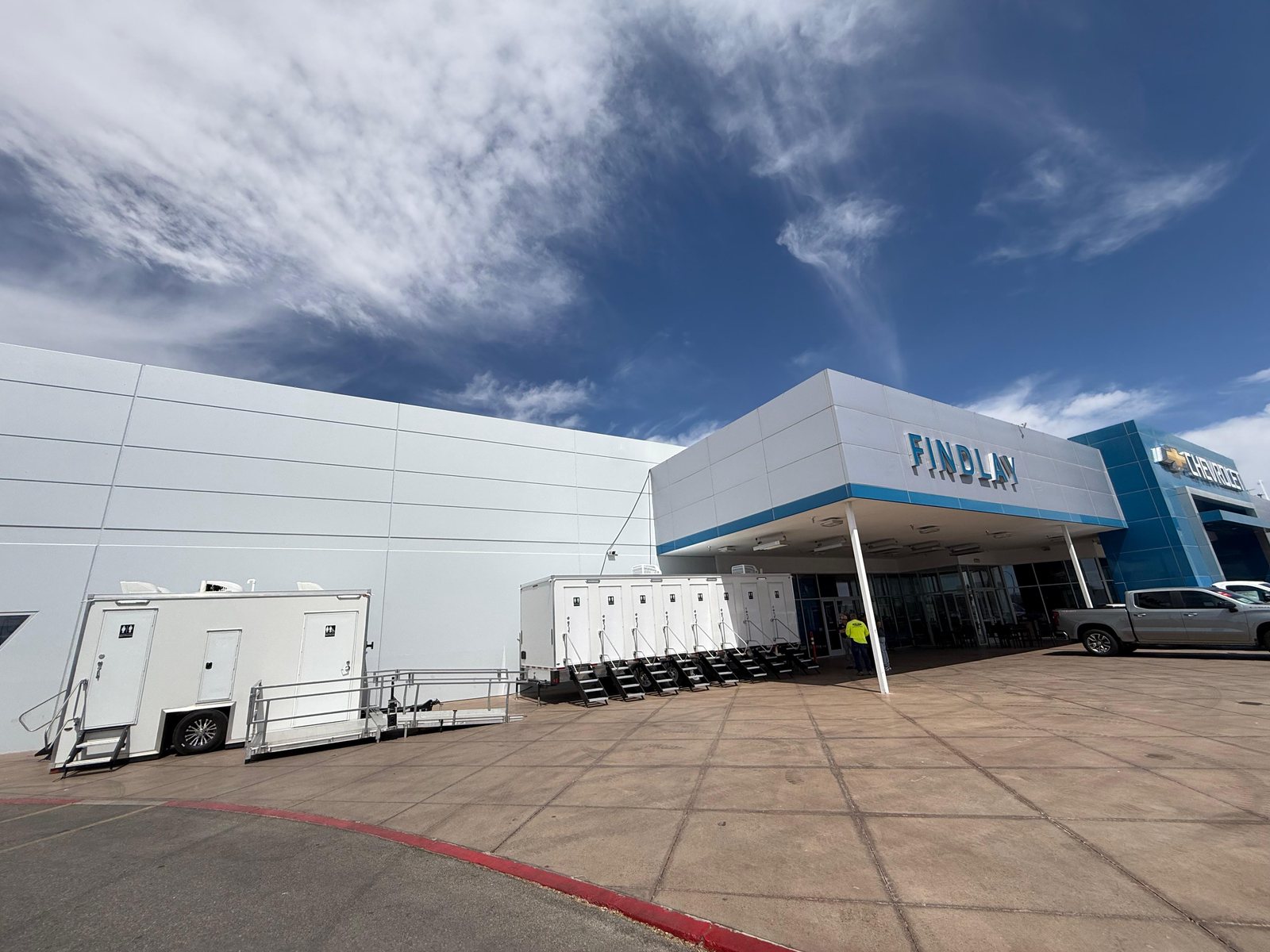
Take a 1,200 person fundraiser. The baseline is about twelve toilets, and if the event runs eight hours with food and drink, the real need is higher. Add a hand-wash station at one per 10 toilets, and keep the units at least 100 feet from food vendors.
Take a 5,000 person race village. The baseline is about fifty toilets, but runners all need a restroom in the same 40 minutes before the start. That calls for many units clustered near the start line and a second group near the finish.
Duration changes the math in another way. A day-long event needs a mid-day service visit, while a multi-day event needs a pumping schedule. Brief us on the hours the gates open and close, and we will plan the service around them.
Nearby restrooms count. If a permanent building is within 200 feet of the gathering, the regulator may reduce the number, but only if people can actually use it. Locked buildings and long walks do not help a crowd.
Add accessibility to the worksheet. Walk the path from the entrance to the trailer spot yourself and check that the ground is firm and wide enough for a wheelchair. Brief us on any guests who need extra room or easier entry when you call, since we answer every call 24/7 and can talk through the placement with you.
When you have the numbers, brief us on the date, the headcount, the hours and a photo or map of the site. We will turn the worksheet into a recommended order.
Sources: Arizona Administrative Code R9-8-303
A seasonal calendar for renting a restroom trailer in Arizona
Arizona flips the usual calendar. The cool season, October through April, is the busy season for weddings, festivals and sports, while summer is the busy season for construction crews who need shade and water. Knowing which season your project falls in helps you plan the unit and the placement.
October kicks off the wedding season, and it stays strong through spring. The Arizona State Fair runs in the fall, and Cardinals home games fill Glendale from September through December. Fall setups usually mean long days with steady foot traffic.
January and February are the peak for big events. The Barrett-Jackson auction at WestWorld in Scottsdale, the Phoenix Open at TPC Scottsdale and the gem shows in Tucson all fall in this window. These events use open lots and tents, and lots of temporary restrooms.
March and April bring spring training, festivals and graduations. Spring graduations at the state universities fall in late April and May, with the same overflow pattern each year. Race villages and fundraisers also cluster here, before the weather turns hot.
Summer shifts the work to job sites. Crews on fab campuses, highway projects and solar fields work through temperatures above 100 degrees, and the state's new heat rules call for water, shade and a place to rest. A trailer set in the shade near the work face is a practical piece of site setup.
Monsoon season runs roughly mid-June to late September. Storms bring flash floods in washes and low ground, so we site trailers on higher, firm ground. If your project is near a creek or a dry wash, loop us in when you request the quote.
Wildfire season in the high country overlaps with monsoon. Evacuations can start fast, and shelters in high schools and community centers have limited restrooms. If you manage an agency plan, build restroom and shower capacity into it before the season starts.
Winter in Flagstaff, Prescott and Payson brings freezing nights and snow. Setups there need access for the tow and the service truck, and a plan for cold mornings. The Four Corners also brings events across the line, and luxury bathroom trailer rentals in Colorado cover that side for larger regional projects.
Whatever the season, the best planning step is the same. Send the dates, the headcount and a site photo, and we will match the order to the calendar.
What to ask any restroom trailer company before you sign
A restroom trailer order has more moving parts than most rentals, and a few questions up front save trouble later. Use this checklist with any company, including us.
Ask who delivers and who services the trailer. Some companies broker the job to a third party, and then your service visits depend on someone you never spoke to. A direct rental company with its own team answers for the whole job.
Ask who answers the phone. During a wedding or a work shift, you need a person, not a ticket. Call the number before you sign and see what happens.
Ask what is included. Delivery, setup, service visits, restocking and pickup should be spelled out. Ask about toilet paper, soap and paper towels so there is no mid-event run to the store.
Ask about tank service. For a multi-day event or a long project, you need a schedule with the days named. Ask who does the pumping and what happens if a visit is missed.
Ask about power and water. Each unit has its own needs, and the answer should come from the actual unit, not a guess. If your site has no hookups, ask what the options are.
Ask about accessible units and the route to them. Do not wait until the week of the event, because units and ground conditions both take planning.
Ask for the paperwork. Agencies and general contractors need an insurance certificate, a W-9 and clear invoicing. Ask for these early, and ask whether the company can handle multi-site orders on one schedule. If your work spans the coast, portable restroom trailer rentals in California are covered by the same team.
Finally, ask for a site check. A photo is a good start, and a visit is better for larger orders. A company that wants to see the site is thinking about the service truck, the ground and the guests.
Placing a restroom trailer on a desert or mountain site: ground, washes, access and shade
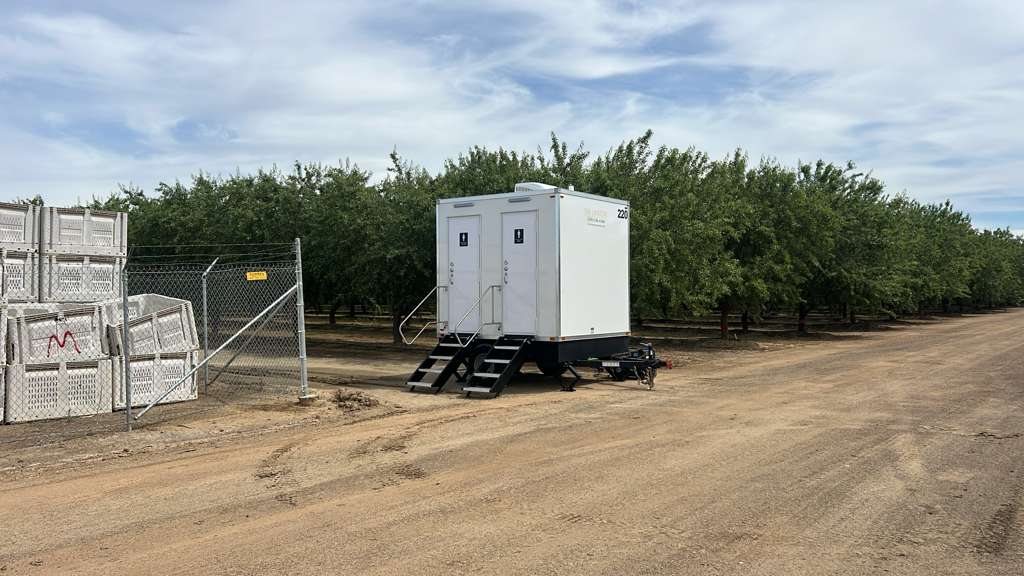
Where the trailer sits matters as much as which trailer you rent. A good spot is level, firm, reachable and close enough that people will use it. This guide covers the checks we make before a trailer goes onto an Arizona site.
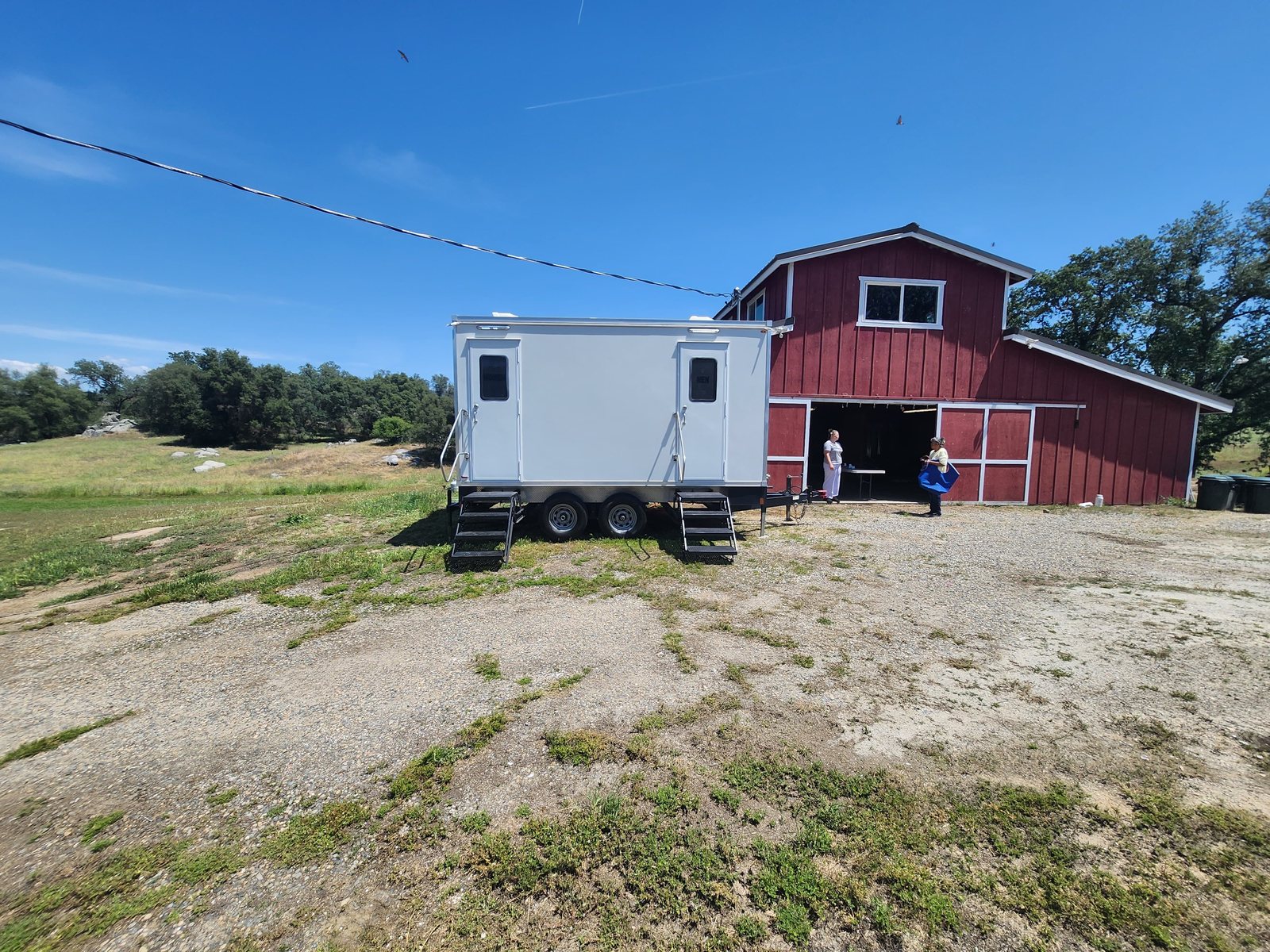
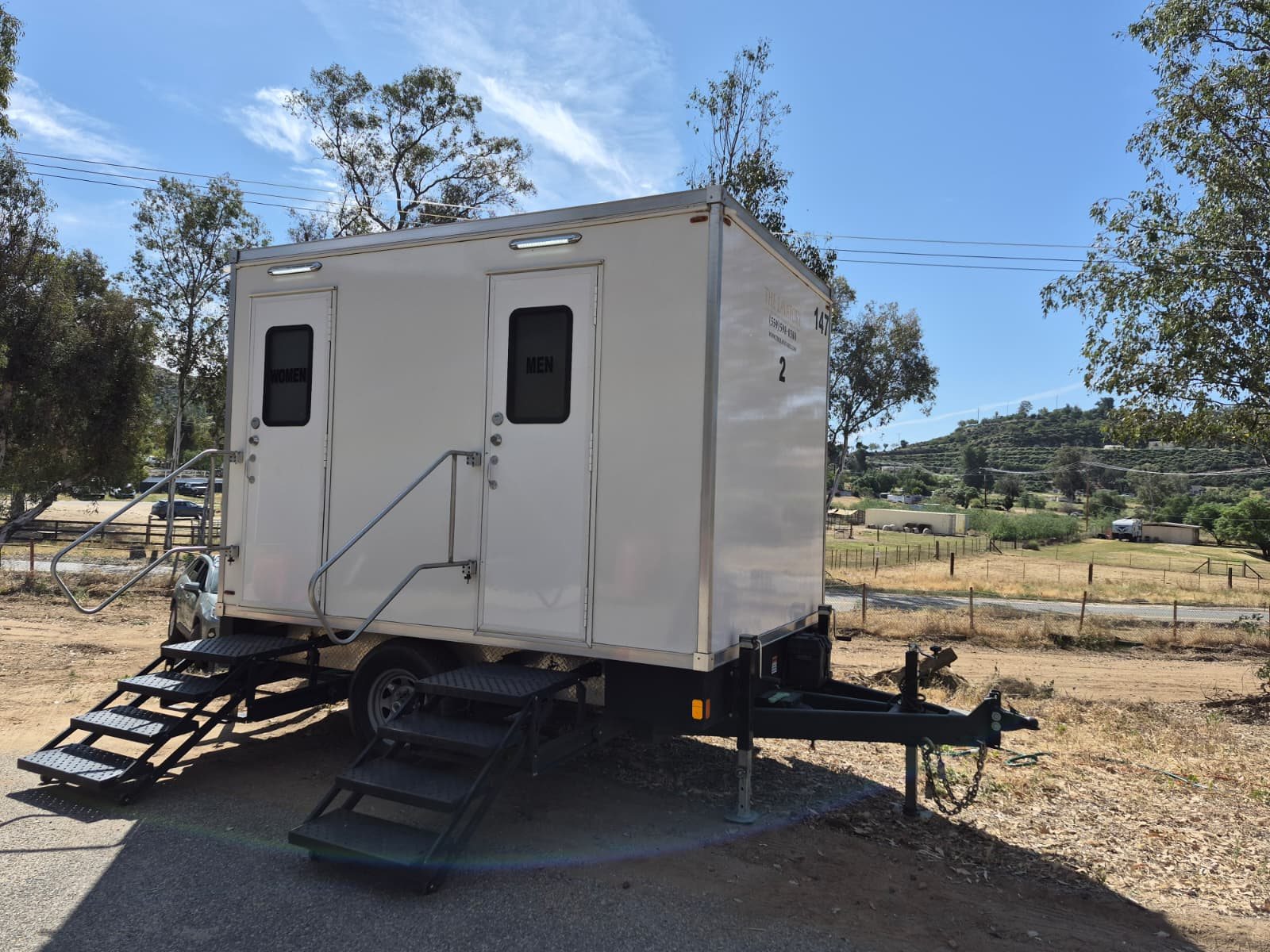
Start with the ground. The trailer needs level, firm ground, and soft sand or fresh fill can shift under the weight. If your site is freshly graded, brief us on how long ago, and we will plan around it.
Check the path in. The tow vehicle needs a wide turning path, and gates, cattle guards and tight driveways can stop it. A photo of the gate and the road beyond it is one of the most useful things you can send.
Stay out of washes and low spots. In monsoon season, a dry wash can run in minutes, and ground that looks fine can flood. We prefer higher ground, even if that means a slightly longer walk.
Keep the units clear of food. Arizona's rule puts public portable toilets at least 100 feet from any food establishment, and we also keep them away from the buffet line, tent kitchens and food trucks. Smell and sightlines matter to guests too.
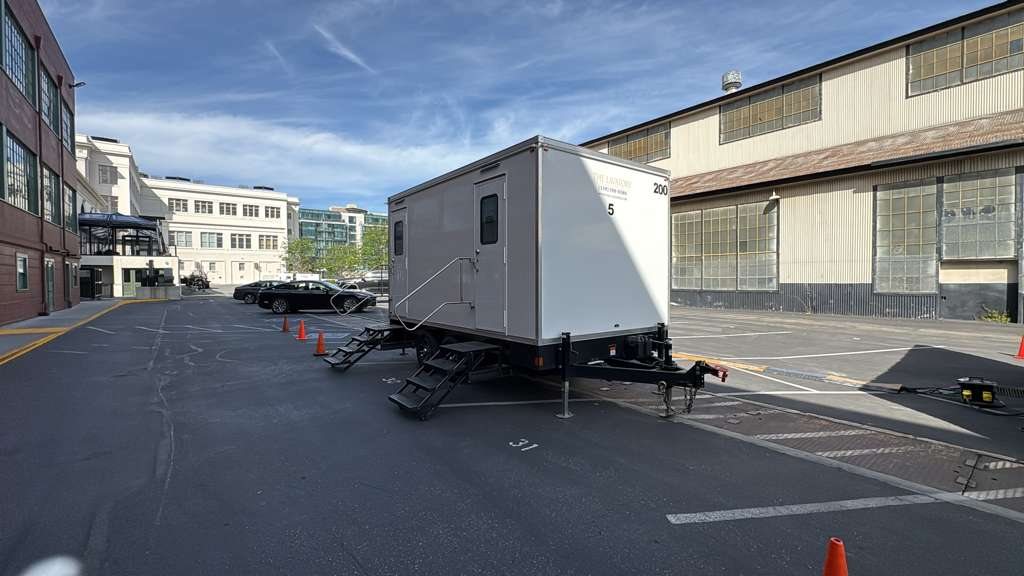
Mind the overhead. Trees, power lines and awnings can block the trailer or the service truck. Look up as well as down when you walk the site.
Plan for shade and light. A trailer on the sunny side of a lot bakes the line, while one near trees or a building wall gives people a bit of relief. For evening events, light the path and the door, not just the trailer.
Think about service access. The truck must reach the tanks without crossing a crowd or a guest path. On highway work, ADOT's [Phoenix area freeway project plan](https://azdot.gov/news/adot-year-ahead-phoenix-area-freeway-projects) shows how many projects are moving at once, and work zones shift, so trailers should be easy to relocate.
Finally, think about growth. If the crowd or crew may grow, leave room beside the first trailer for more. It is much easier than moving units later.
Sources: ADOT Phoenix area freeway projects for the year ahead